Feature Brief
Enea Wi-Fi Offloading Solution
An overview of one of the world's most widely deployed systems for Wi-Fi offloading.
Open
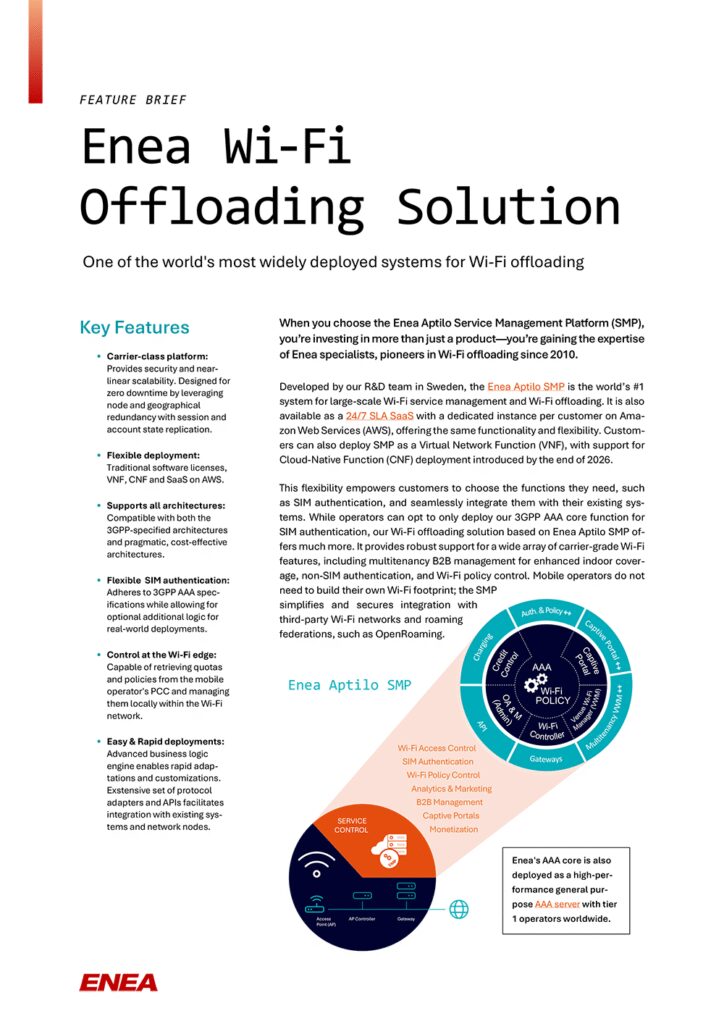

World’s most deployed solution for Wi-Fi Offload
Some refer to it as mobile data offloading, Wi-Fi offload, or Wi-Fi offloading. If it were up to us, we’d call it “Rightloading,” as that more accurately describes the process. The term “mobile data offloading” can be misleading, implying traffic removal from mobile networks. Today, with few exceptions like MVNOs, the focus has shifted toward cost-effective indoor coverage and optimizing both mobile and Wi-Fi network assets, especially in capacity and performance.
With higher frequencies in 5G, the synergy between mobile and Wi-Fi becomes even more critical for indoor coverage and capacity expansion. Additionally, as more devices are designed as “Wi-Fi-only,” operators can reduce churn and enhance subscriber loyalty by offering robust Wi-Fi connectivity.
#1 in Offloading
Enea Aptilo Service Management Platform (SMP, available as software or cloud-based service on AWS, is the most widely deployed system for managing traffic offload to Wi-Fi.
We are recognized globally as the leading authority on Wi-Fi offloading. Our innovative solution has received numerous industry awards, underscoring our commitment to excellence.
Our vendor-agnostic platform offers broad support for all leading Wi-Fi access points and gateways, giving you the flexibility to select the best-of-breed equipment that suits your needs.
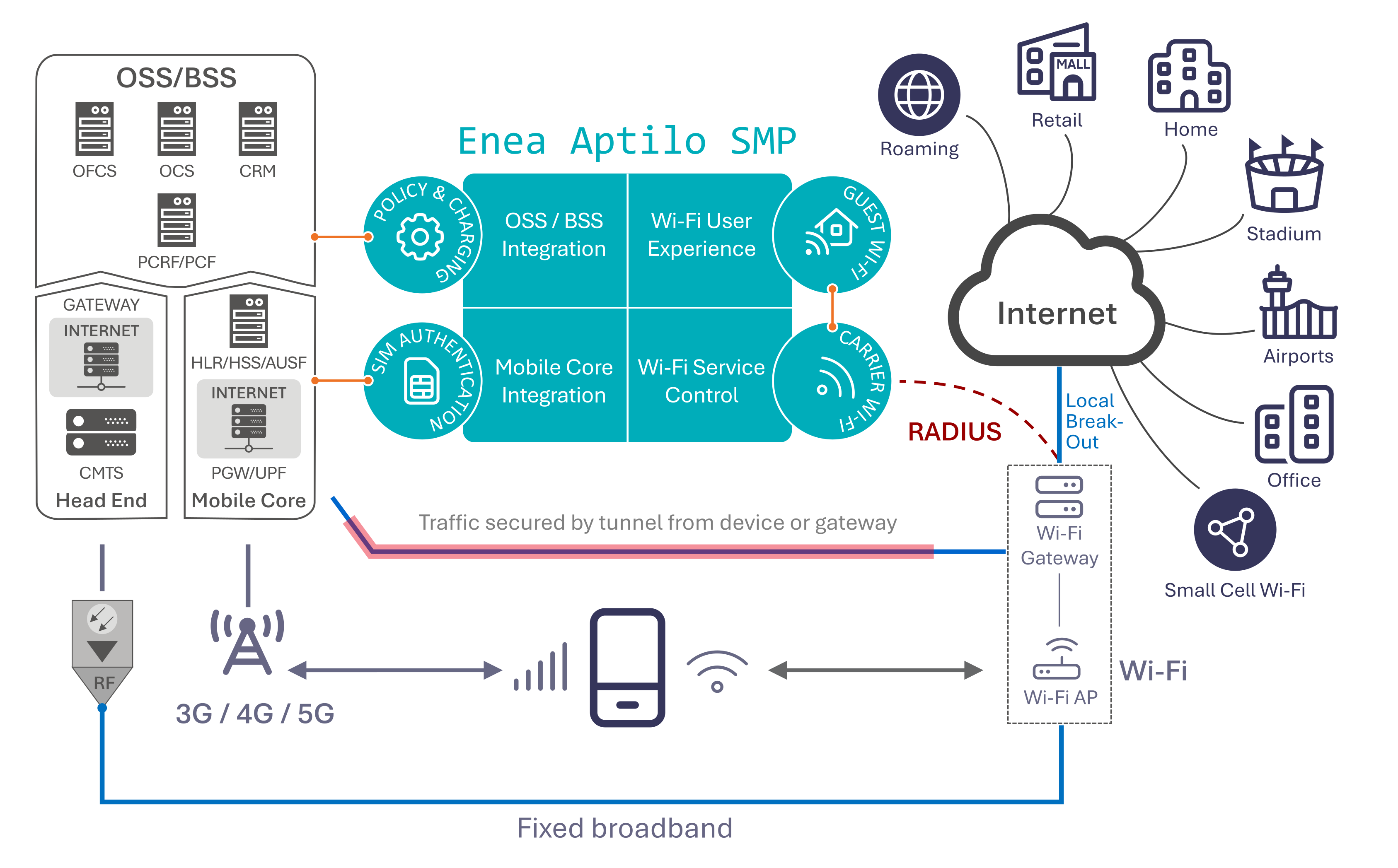
Indoor coverage challenges using macro cells already exist with 4G; for example, approximately 20% of buildings in the US experience inadequate indoor coverage. These issues are worsened with 5G due to the higher frequency bands involved.
Initially, 3.1–4.9 GHz is a commonly used range, but 5G also employs millimeter-wave bands above 30 GHz, which require line-of-sight for effective reception. At 10 GHz, for instance, indoor coverage is limited to placing the device as close as possible to untreated glass or windowpanes. However, energy-efficient and treated glass used in many modern buildings can significantly attenuate signals, making reliable indoor coverage increasingly difficult.
Wi-Fi is more relevant than ever in the 5G era. Learn more about this in our white paper “Wi-Fi in the 5G era – Strategy guide for operators”

While mobile network traffic data may suggest overcapacity, this is often just a high-level average. Some cell sites experience congestion, while others serve only a few subscribers. Selective Wi-Fi Offload provides the solution by building Wi-Fi capacity where it’s needed most, enhancing user satisfaction in critical areas (Churn Zones) and ensuring consistent indoor coverage.
The convergence trend is evident on a macro level as mobile operators merge with fixed operators that have an existing Wi-Fi footprint. For these operators, Wi-Fi Offloading is an obvious choice. By implementing the right configurations and properly provisioning devices, they can easily add an extra layer of mobile network capacity through Wi-Fi. However, achieving this potential requires collaboration between the mobile and fixed divisions of the operator’s organization to maximize the Wi-Fi footprint.
Read our blog post, “Break Organizational Silos,” to learn more.
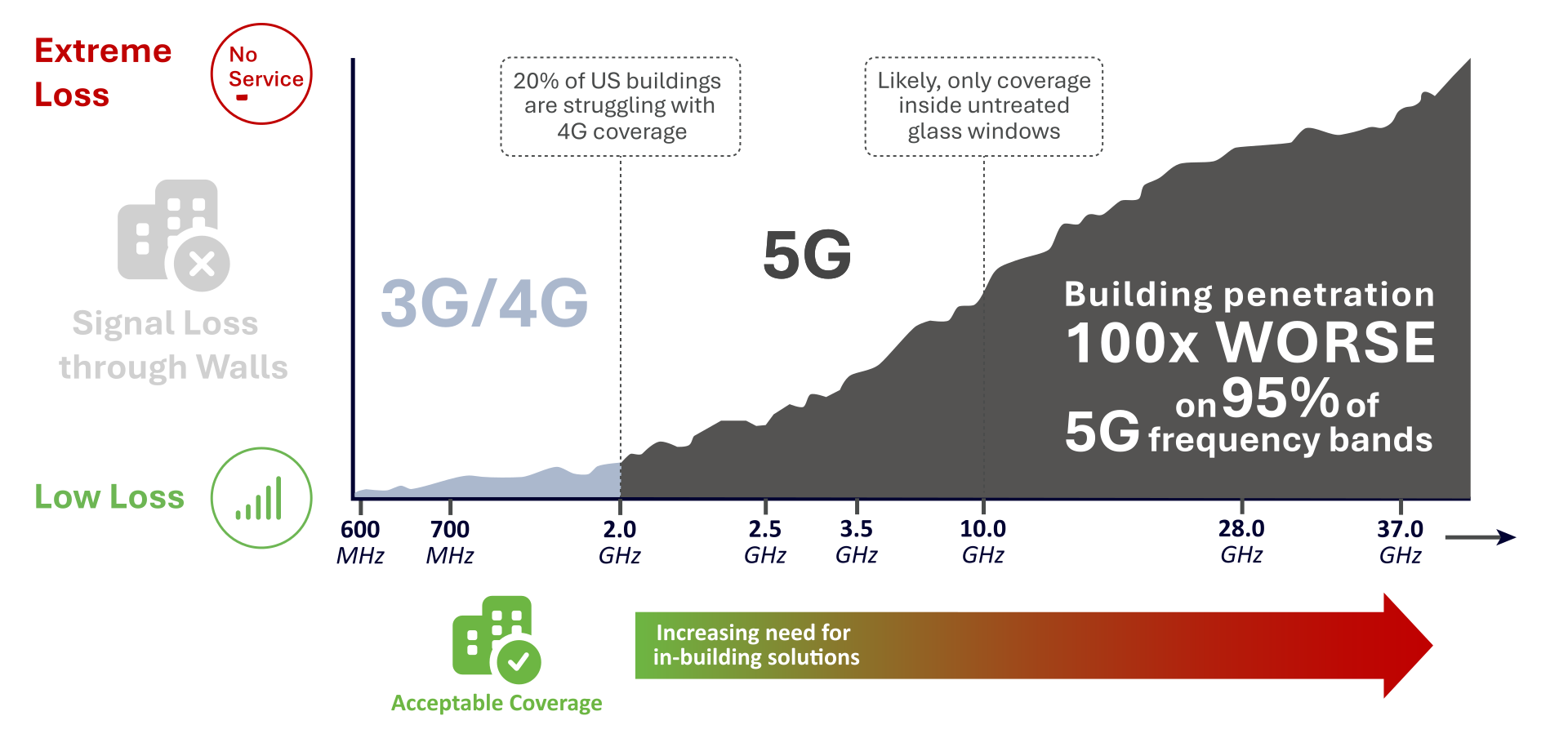
Mobile operators need to address three key aspects of Wi-Fi Offloading to effectively redirect data traffic from cellular networks (3G/4G/5G) to Wi-Fi.
Our Wi-Fi offload solution enables service providers to manage these aspects holistically, offering a pragmatic and cost-effective deployment approach.
Whether mobile operators partner with existing Wireless Internet Service Providers (WISPs), build their own Wi-Fi offload network, or both, they face common challenges.
With over two decades of experience, Enea delivers carrier-class Wi-Fi service management and policy control solutions proven in more than 100 service provider Wi-Fi deployments across 70 countries since 2001. Our Enea Aptilo SMP (software) and SMP-S (service on AWS) offer a highly scalable, carrier-grade public Wi-Fi solution. They include advanced enhancements for Wi-Fi offloading, making them ideal for operators aiming to expand their Wi-Fi footprint and integrate their own or third-party Wi-Fi networks.
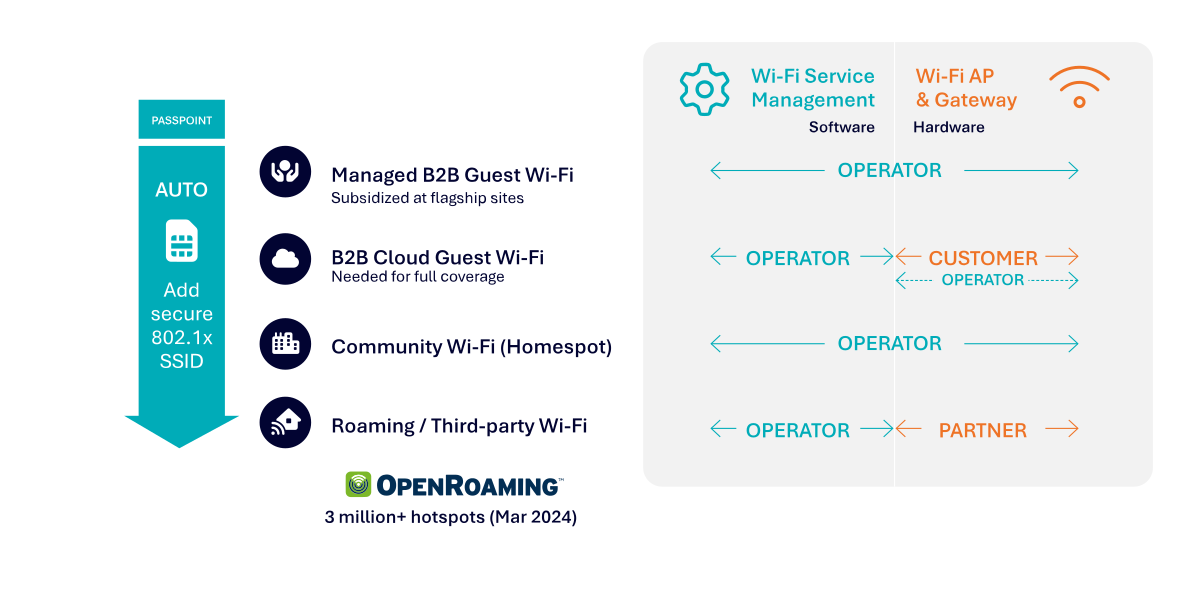
Many roaming interfaces for Wi-Fi service providers have been technically verified through our platform, including WBA OpenRoaming and leading roaming aggregators.
For operators looking to monetize Wi-Fi beyond simple offloading, we offer a best-in-class Wi-Fi hotspot system supporting a wide range of business models, B2B services, and payment options. Deploying an additional secure SSID for Wi-Fi offload within the operator’s B2B footprint is a cost-effective way to improve indoor coverage and enhance subscriber experience.
Wi-Fi-enabled mobile phones with advanced operating systems such as Android and iOS are constantly improving their ability to select the best network when both cellular and Wi-Fi are available. They typically remember previously connected networks and reconnect automatically.
This process is further enhanced by Passpoint (Hotspot 2.0), which leverages the 802.11u standard. It enables seamless selection of Wi-Fi offload networks, including those participating in the OpenRoaming fedferation. Automatic login to the operator’s Wi-Fi network can also be achieved using EAP-based authentication on secure SSIDs without Passpoint support.
As a mobile operator, you must accept that the device makes the decision on which network to connect to, optimizing for user experience. However, there are ways to exert greater control. Connection managers that apply policies dictating when and where cellular-to-Wi-Fi handovers should occur are one option. Although these are less common today — due to management complexity and Apple’s restrictions on third-party connection management — alternatives exist.
For instance, with Enea Aptilo SMP operators can implement a policy-driven approach that gracefully rejects Wi-Fi connection attempts without disrupting the device’s future connectivity, enabling both static and dynamic traffic steering. Using the Enea Aptilo SMP policy engine, static rules can be set—such as denying access to certain user tiers, specific times, or locations. Additionally, integration with the Enea Traffic Management solution and CAMARA API allows dynamic real-time per session assessment of network QoE (Quality of Experience). If cellular network conditions are deemed sufficient, the system can reject Wi-Fi connection attempts so the device stays on the cellular network. Re-assesment of the conditions can be made at a certain frequeancy with Change of Authorization (CoA) requests. Learn more in our article on QoE-based selective Wi-Fi offloading.
Once a device selects the Wi-Fi network, the authentication is automatic and secure for Wi-Fi Offloading through SIM Authentication (EAP-SIM, EAP-AKA, EAP-AKA’, and 5G-AKA).
Whether you backhaul traffic to the mobile core or deploy local breakout directly to the internet (a strategy adopted by 90% of our customers), our Wi-Fi offloading solution provides control over user experience and helps monetize your Wi-Fi investments.
It’s possible to interact with the mobile core’s policy and charging functions, checking-out quotas and enforcing policies at the edge through local data traffic breakout, thereby offloading the whole cellular network and not just the RAN.
Modern Wi-Fi gateways and routers have built in DPI functionalty, some of them enabled by Enea’s embedded DPI technology, which open up the possibilty to even perform DPI at the edge without having to backhaul traffic.
An overview of one of the world's most widely deployed systems for Wi-Fi offloading.
Open
An extensive overview of the business benefits for mobile network operators (MNOs).
Access

The definitive technical guide into successfully deploying a Wi-Fi offloading solution. (80 pages)
Access