CLOUD-NATIVE REQUIREMENTS FOR MODERN MOBILE OPERATORS
Next-Generation Number Portability & ENUM
As mobile operators transition to 5G core networks and embrace cloud-native architectures, traditional “set it and forget it” approaches to Number Portability & ENUM solutions are no longer sufficient. Modern MNOs require flexible, scalable, and automated solutions that can evolve with their network transformation journey while maintaining service continuity and regulatory compliance.
The Evolution Beyond Legacy Thinking
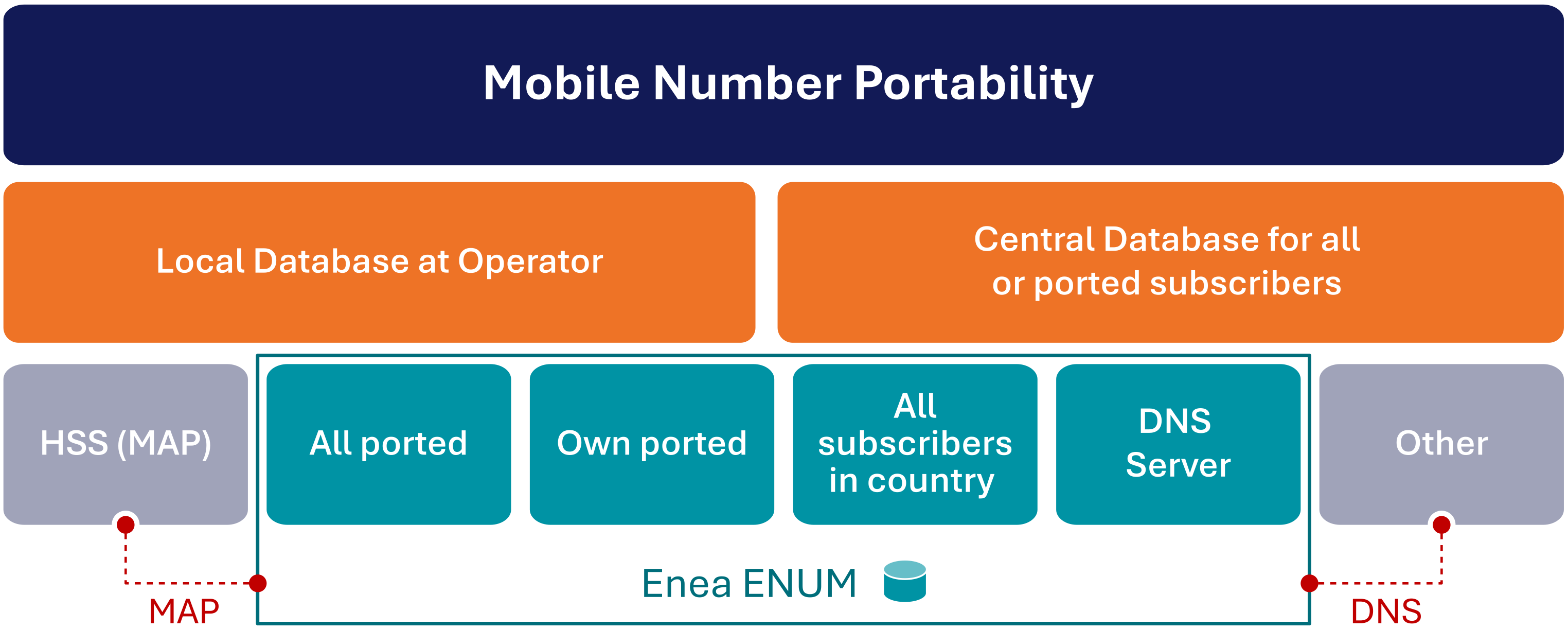
Number portability has been a regulatory requirement for many years, and E.164 Number Mapping (ENUM), which translates ordinary phone numbers to domain-based SIP addresses used in IMS for VoIP, has been around since the early 2000s. Still, these cannot be considered and treated as legacy functions. Their importance has only increased with the necessity to replace Circuit Switched Core with IMS for 5G spectrum refarming and network transformation.
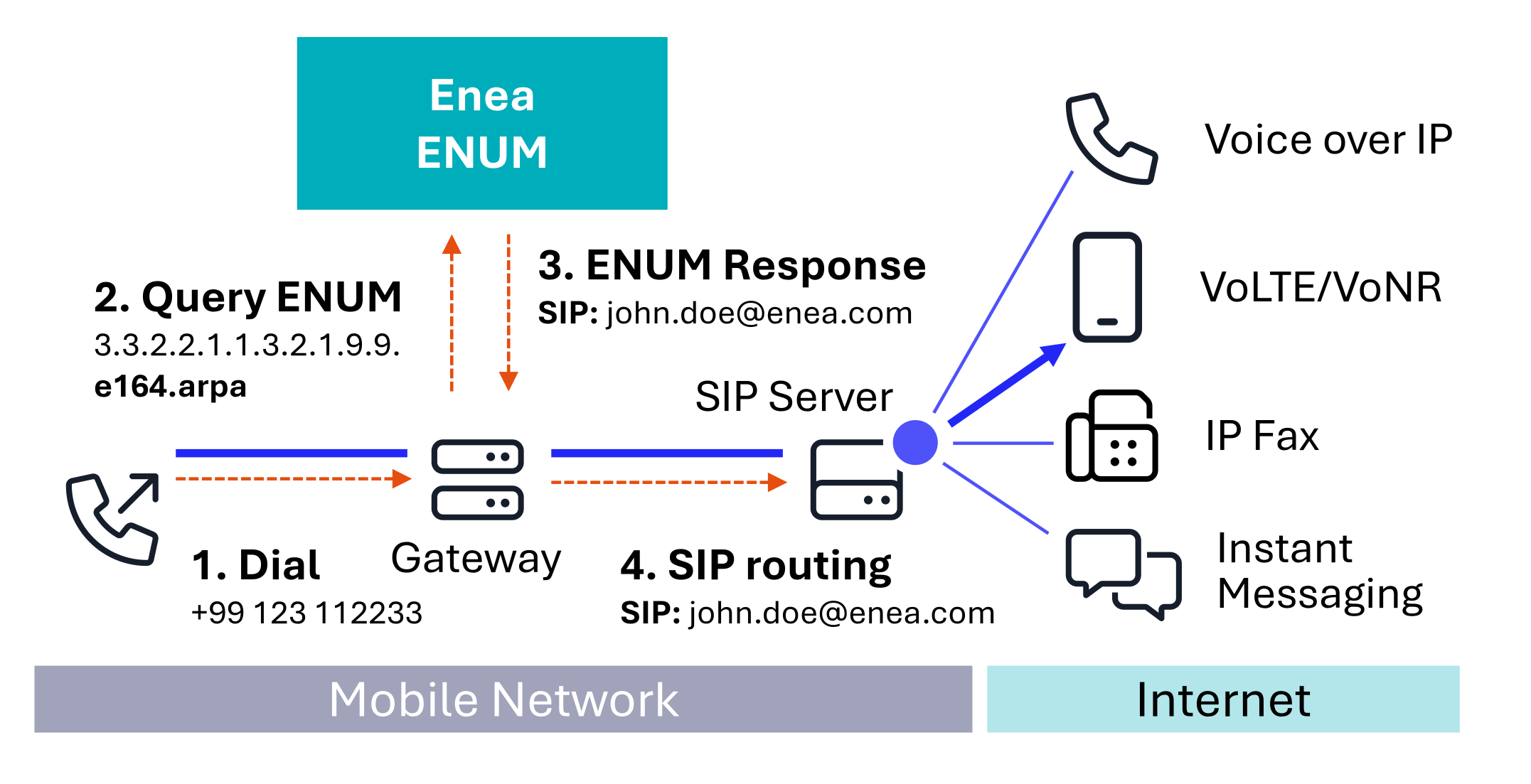
There are many solutions for Number Portability & ENUM on the market. With highly standardized functionality that performs such a specific task, the risk is high that both mobile operators and vendors choose to apply the strategy of “Set it and forget it.” However, this mindset could backfire in the highly dynamic 5G era.
Why “Set and Forget” No Longer Works:
- Rapid subscriber growth requires dynamic scaling.
- Cloud-native architecture enables automation and continuous integration and deployment.
- Regulatory changes and vulnerability handling need quick implementation.
- New services and business models require flexible rule engines.
- Multi-vendor environments need seamless integration capabilities.
In this article, we outline the main requirements for a next-generation Number Portability & ENUM solution such as the Enea ENUM.
Cloud-Native Support
Most mobile operators implementing or migrating to the 5G Service-Based Architecture (SBA) will leverage the advantages of cloud-native function (CNF) deployment, not only for the core network but also for adjacent systems such as IMS and ENUM. This means that the Number Portability & ENUM solution must be truly cloud-native while maintaining support for legacy interfaces such as MAP.
The solution must have the versatility to serve both smaller operators and larger Mobile Network Operators with several hundred million subscribers, fully leveraging the efficient scaling that comes with CNF deployments to rapidly accommodate subscriber growth.
Furthermore, some operators may not be ready to transition directly to CNF architecture. If they start with Virtual Network Function (VNF) deployments, support for phased cutovers, data synchronization capabilities, and robust rollback plans is essential to mitigate risks.
Migration Flexibility is Critical
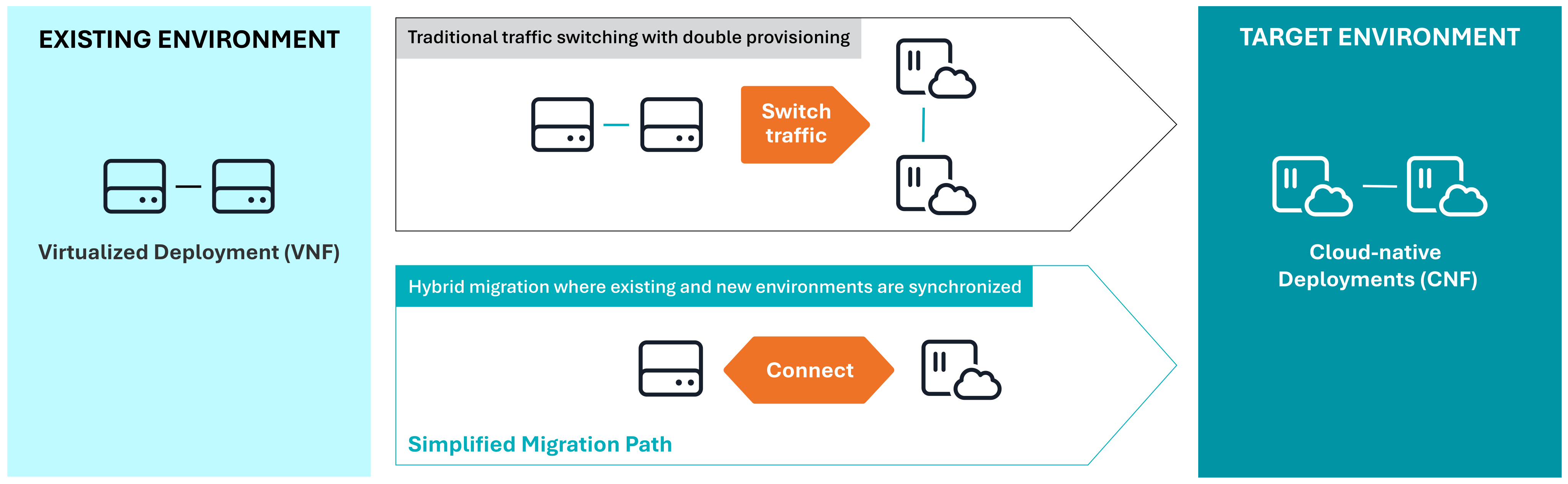
Tools and methodologies for smooth transition are paramount. Choose a solution such as Enea ENUM that makes migration effortless — deploy as a VNF today and move to CNF at your pace, with minimal risk and no interruption to existing services. The system must permit live provisioning to any site during migration so VNFs can be decommissioned and replaced by CNFs on a per-site basis without impacting active services.
Simplified Management and Automation
For CNF deployments, support for automated updates and upgrades, embedded tests, and self-validation via CI/CD pipelines streamlines operations. A solution that supports GitOps allows you to manage and version desired system state centrally. This aligns your operations with modern CI/CD pipelines, automating updates and upgrades rather than treating them as manual maintenance windows.
Key Automation Requirements:
- Zero-touch provisioning and configuration.
- Automated health checks and self-healing capabilities.
- Integrated monitoring and alerting.
- Seamless integration with existing OSS/BSS systems.
- Policy-driven configuration management.
Built-in Business Logic Engine
As discussed, Number Portability & ENUM is a highly standardized function, but we have experienced in recent deployments, that mobile operators increasingly require specialized functionality such as handling different subscriber segments with unique rules.
Therefore, consider a solution that includes a powerful, granular business logic engine that allows definition of new complex service rules, featuring support for integration with external policy definition and enforcement nodes. Open APIs and SDKs are vital for seamless integration with existing OSS/BSS, databases, and third-party applications.
An optimal solution provides “plugins” for core network functions and critical integrations. Equally vital is robust lifecycle management for developing and deploying custom extensions. This modularity ensures agile feature introduction, eliminating dependencies on lengthy software release cycles.