Voice Protection

Voice Firewall

Reduce voice fraud, minimize abuse of voice services, comply with regulators requirements and strengthen your brand.

Zero-trust voice call security protects against caller ID spoofing, wangiri, and flash calls

Mobile network operators use Enea Voice Firewall to protect subscribers against voice call fraud, spam calls, and unwanted robocalls by blocking them in real-time. It secures incoming and outgoing calls from caller ID spoofing and Wangiri and enables the monetization of flash calls.

Enea Voice Firewall plays a crucial role in supporting mobile network operators in complying with rules and recommendations from national regulatory authorities. Its unique zero-trust approach gives it the capabilities required by regulators to detect and block spoofed calls with the highest possible accuracy without leaving any loopholes open for scammers to exploit.

Features and Benefits

Comply with Rules and Regulations

Regulators require operators to implement capabilities to protect against spoofing. The Enea voice firewall is designed to provide all the capabilities operators need to comply with existing and upcoming regulations.

Secure All Network Generations

Zero-trust capabilities for 2G-5G and beyond. The Enea Voice Firewall is not limited to only some network generations or voice call technologies.

Establish Zero-Trust

The zero-trust design checks every call in real-time, leaving no loopholes for scammers and blocking even the first call from any illegitimately spoofed number without dependencies on other operators or third parties.

Cross-correlate with Signaling

Discovers sophisticated threats that less capable solutions would miss, thanks to cross-correlation with signaling in a single processing engine.

Boost Customer Satisfaction

Reducing voice call fraud and spoofed robocalls improves subscriber satisfaction and protects the brand from eroded trust and degraded reputation.

Adaptable to Local Conditions

The Voice Firewall provides a comprehensive, validated ruleset for spoofing protection. All rules are easily customizable and adaptable to local regulations and traffic conditions, with a flexible process for creating tailored rules.

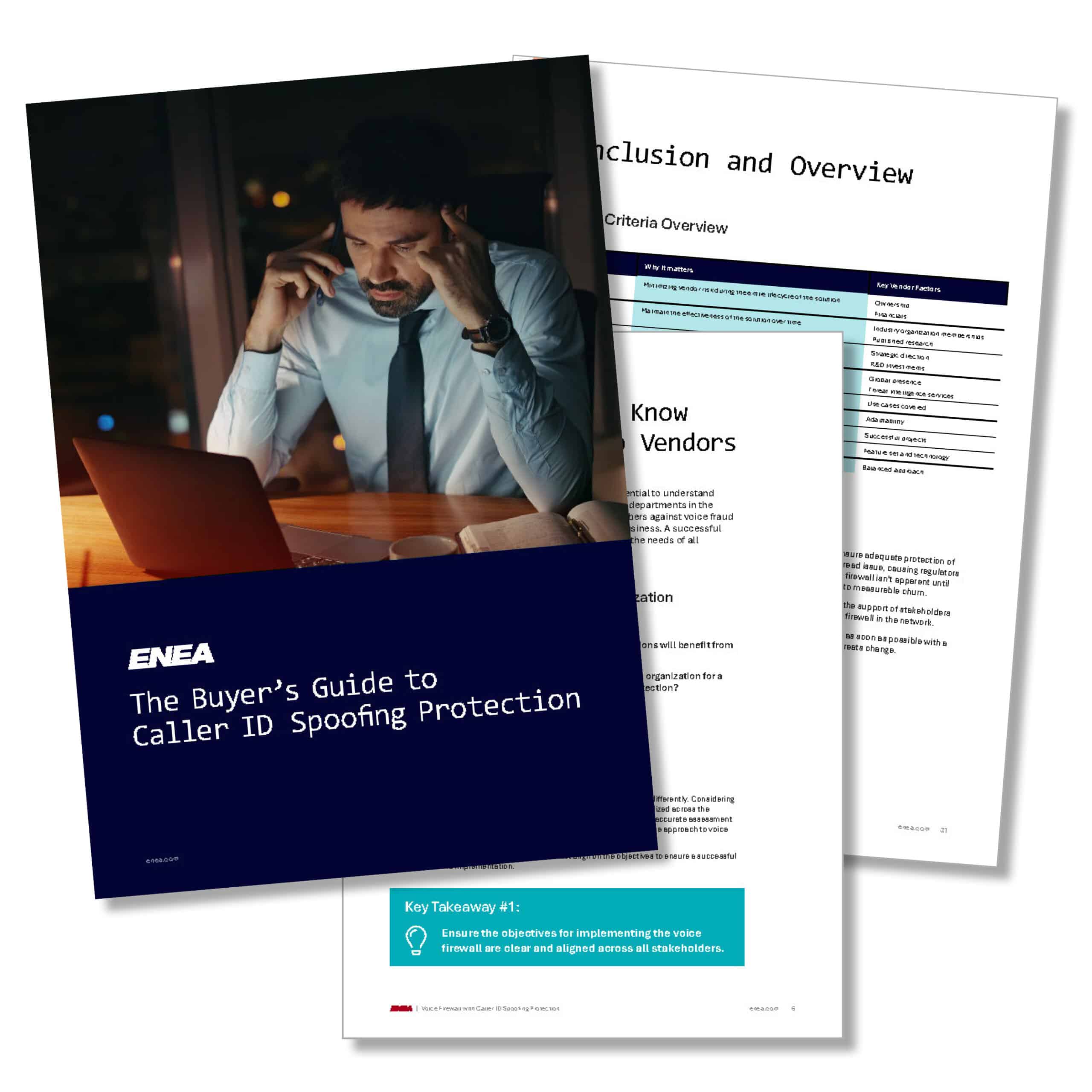
Buyer’s Guide

Caller ID Spoofing Protection – Voice Firewall

Buyer’s Guide

This guide provides the questions you need to ask and key takeaways you need to consider to choose the right solution for protecting against Caller ID (CLI) spoofing. It helps you determine your needs, shortlist vendors, and avoid common pitfalls.

Mitigating Voice Threats and Fraud

MNOs face the challenge of mitigating the damage caused by a broad range of voice threats and frauds such as Spoofed numbers, Wangiri calls, Flash calls and SIM Box (Interconnect Bypass).

Caller ID Spoofing

Caller ID spoofing is a technique where a caller deliberately falsifies the phone number and/or name displayed on the recipient’s caller ID. It is often used by scammers to impersonate trusted organizations, hide their identity, or make calls appear local. It is commonly associated with fraud, phishing, and phone-based scams. In many countries, regulators mandate operators to detect and block spoofed calls.

IRSF and Wangiri

International Revenue Share Fraud (IRSF) is a telecom scam where fraudsters generate calls to premium-rate international numbers they control, earning a share of the revenue from call charges. Wangiri is a common form of IRSF, where scammers place missed calls that prompt victims to call back, connecting them to expensive premium numbers and generating fraudulent revenue.

Flash calls

Flash calls can represent missed revenue opportunities for mobile network operators. Instead of sending paid SMS messages for verification, some apps trigger a very short call that automatically confirms a user’s phone number. Because these calls often last only a second, operators earn little or no revenue, reducing potential income from traditional SMS-based authentication services.

SIM Box Fraud

SIM box fraud (interconnect bypass) is a telecom scam where criminals use devices called SIM boxes to route international calls through local SIM cards. This bypasses official international gateways, reducing call costs for fraudsters. Telecom operators lose revenue because calls appear local instead of international. It is commonly used by illegal call centers and organized telecom fraud groups.

  • Protecting our subscribers is a strategic priority. Improving end-user security to mitigate fraud and abuse in our network adds value to all our users. Enea is instrumental in our work to secure our network against voice call threats such as caller ID spoofing. Read the Press Release

    Mohamed Al-Fowey Vice President & Chief Technology Officer, Telecom Egypt

GET IN TOUCH

Want to Learn More About Enea’s Voice Firewall?

Are you concerned about how regulations and voice fraud impact your security operations or subscriber satisfaction? Or would you like to know more about the features and benefits of Enea’s voice firewall? Use our contact form to send us your questions or schedule an introduction call with our local sales teams. They are there to help.