Chapter 5
Satellite / NTN – Refresh
Before we delve into how satellites will increasingly become an integral part of the infrastructure for smartphone communication, it’s important to provide some basic information about satellite communications.
Although satellite communications have existed for many years, they were often associated with espionage, television delivery, and expensive specialized handsets. However, this perception has changed dramatically with the massive deployment of Low Earth Orbite (LEO) satellites, pioneered by SpaceX’s Starlink.
Additionally, the adoption of 3GPP-compliant NTN technologies represents a significant paradigm shift, allowing the sector to harness the economies of scale inherent in the broader 3GPP ecosystem, particularly through mass-produced chipsets.
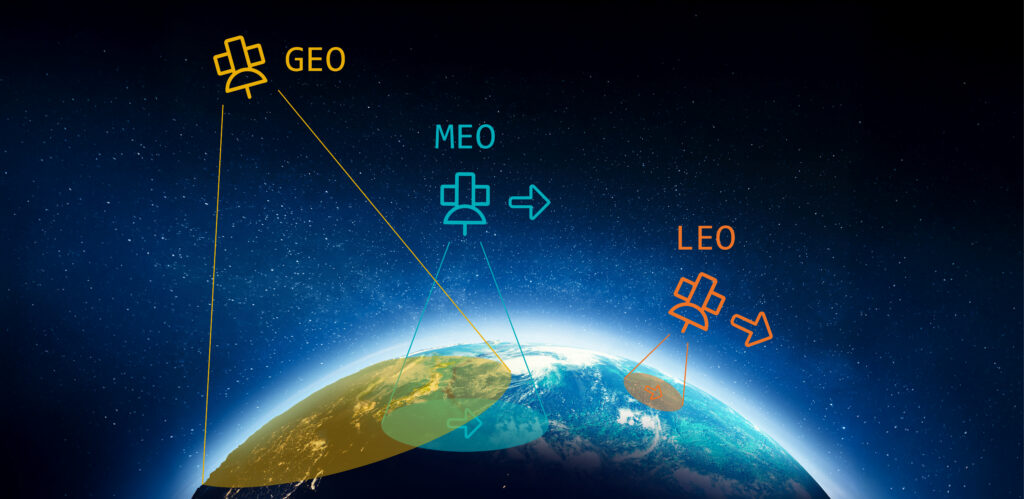
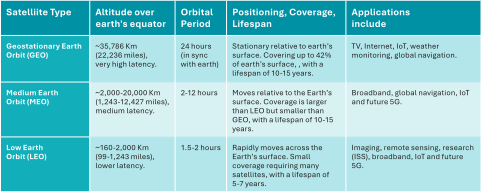
Satellites can be divided into three main categories:
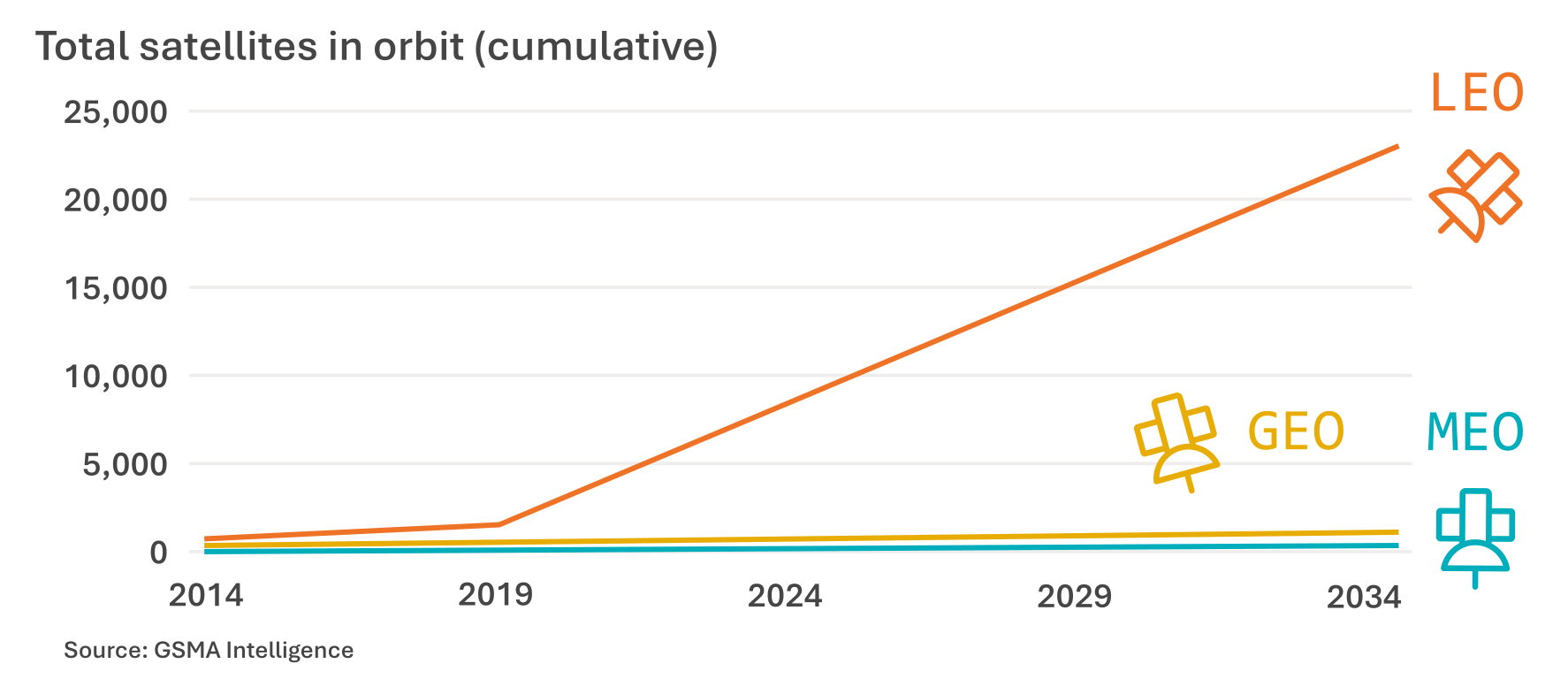
With its lower latency and reduced path loss, LEO satellite communication is expected to dominate the market for direct communications with standard smartphones, following the 3GPP specifications for Non-Terrestrial Network (NTN) Direct-to-Cell (D2C). This, coupled with the decreasing cost of launching satellites into orbit due to the rise of reusable launch vehicles, will lead to a dramatic increase in the number of LEO satellites.
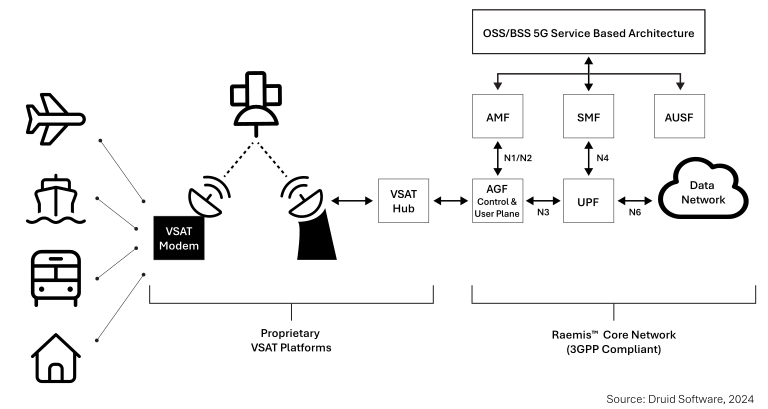
Although there is currently strong focus on D2C communications, existing VSAT providers are currently exploring how to integrate with 3GPP networks. VSAT (Very Small Aperture Terminal) is a relatively small dish antenna at the customer premises, typically ranging from about 60 cm to 2.4 meters in diameter, communicating with a larger dish antenna at the service provider’s hub facilities. It is far more suitable for satellite communications than a mobile device will ever be.
There is currently 6 million VSAT terminals deployed at ships, airplanes, trucks and buildings with proprietary technology which makes them non-interoperable. There is significant potential in integrating these terminals into the broader 3GPP ecosystem by using an Access Gateway Function (AGF) to bridge them to the 5G core.
Once connected to the 5G core, operators can provision and manage these terminals through standard 3GPP procedures. Vendors such as Druid Software provides this AGF node as well as a 3GPP compliant core network suitable for VSAT providers.